LCD vs. OLED: Decoding Smartphone Display Technologies
If you are shopping for a new smartphone, you have probably noticed a distinct trend: expensive flagship phones almost always boast OLED displays, while mid-range and budget phones stick to LCDs.
Most phones on the market today use one of these two display technologies. But how exactly are they different? What makes one more expensive than the other, and which one should you choose? Let’s break down the ultimate battle of the smartphone screens.
How Do They Actually Work?
To understand the difference between LCD and OLED, you first have to understand how screens display images. To put it simply, your display is made up of millions of tiny, pinhead-sized dots called pixels. These pixels work together to create the image you see.
The primary difference between the two technologies lies in how these pixels are illuminated.
LCD (Liquid Crystal Display)
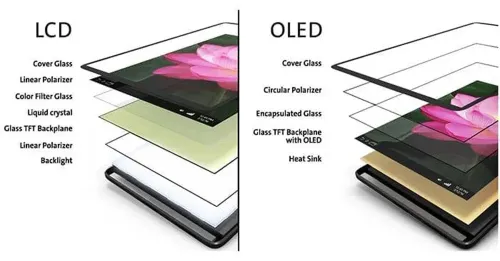
In an LCD, the pixels do not emit their own light. Instead, they require a dedicated backlight panel to illuminate the pixels from behind so you can see the image. Because of this extra backlighting layer, LCD screens are generally thicker.
Common LCD Types: IPS, LTPS, TFT, and VA. Regardless of the acronym, the fundamental backlighting technology remains the same.
OLED (Organic Light Emitting Diode)
Unlike LCDs, the pixels in an OLED screen produce their own light. When a pixel needs to show a color, it lights up independently. When it needs to show black, it simply turns off. Because there is no need for a bulky backlight, OLED displays are incredibly thin.
Common OLED Types: PMOLED, AMOLED, TOLED, and FOLED. They all share the same self-illuminating property.
The Pros and Cons: LCD vs. OLED
Neither technology is absolutely perfect. They both come with a unique set of advantages and disadvantages that dictate where they are used.
LCD Displays
The Advantages:
Cost-Effective: LCDs are easy and inexpensive to manufacture, keeping phone prices down.
Color Accuracy: They naturally display very correct, true-to-life colors.
Durability: They are immune to image "burn-in," a permanent ghosting effect that can happen on other screens.
High Brightness: The powerful backlight makes them great for outdoor visibility.
The Disadvantages:
Poor Contrast Ratio: Because the backlight is always on, LCDs struggle to create true black. Dark areas often look gray or washed out.
Higher Power Consumption: Powering an entire backlight drains the battery much faster.
OLED Displays
The Advantages:
Energy Efficient: Because individual pixels turn off when displaying black, OLEDs consume much less power.
Stunning Visuals: They produce rich, vibrant colors and perfect, natural "Deep Blacks."
Great Viewing Angles: The screen looks clear and vibrant no matter what angle you look at it from.
Modern Tech Compatibility: The thin nature of OLEDs makes them compatible with modern Under-Display Fingerprint Scanners.
The Disadvantages:
High Cost: Manufacturing them requires complex organic materials, making them much more expensive.
Burn-In Risk: Over time, static images (like your phone's status bar) run a higher risk of burning into the screen permanently.
Which Display Should You Choose?
The good news is that both technologies are excellent and constantly improving. LCD tech is getting better at color reproduction, while OLED manufacturing is slowly becoming more affordable.
Ultimately, your choice depends on your personal taste and the size of your budget:
Choose LCD if: You are on a strict budget, want guaranteed immunity from screen burn-in, and prefer natural color accuracy.
Choose OLED if: You have a higher budget for a premium device, want to save battery with dark mode, and crave punchy colors with perfectly deep blacks.
No matter which one you choose, the technology in the palm of your hand today is more advanced than ever before.