Farming the Final Frontier: How Scientists are Growing Food for Space
When we think about the future of space exploration, our minds usually jump to massive rockets and cutting-edge propulsion systems. But one of the biggest hurdles to long-term space travel isn't just getting there—it's figuring out how to survive once we arrive.
As humanity looks to expand further into the cosmos, relying solely on food and oxygen deliveries from Earth will become increasingly difficult, if not impossible. That is exactly why scientists and botanists are hard at work figuring out how to farm in the stars.
Earth-Bound Experiments: The Volcano Greenhouse
Before taking agriculture to orbit, researchers must first test their theories in extreme environments right here on Earth.
Cyprien Verseux, a Ph.D. student majoring in biology, has spent years doing exactly that. High up at 8,000 feet above sea level on the sloping Mauna Loa volcano in Hawaii, Verseux has been studying how to grow lettuce. While he notes that his research might not be the key to physically reaching other planets, it tackles a critical survival problem: how to sustainably produce enough basic food and oxygen to keep humans alive during deep space expansion.
The "Veggie" Program: Agriculture on the ISS
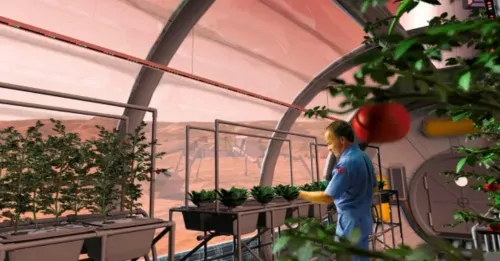
Since 2014, astronauts on the International Space Station (ISS) have been getting their hands dirty using seed-based farming methods. This initiative, known as the Veggie program, is spearheaded by Gioia Massa, a botanist at the NASA Kennedy Space Center.
The Veggie system is designed to be simple, highly portable, and astronaut-friendly. Here is how it works:
- The Greenhouse: It is roughly the size of a mini-refrigerator.
- The Seeds: Seedlings are planted in small bags that are pre-packed with special fertilizers.
- The Environment: The system uses adjustable LED lights and electric fans to simulate ideal growing conditions and accommodate the seedlings as they mature in space.
Defying Microgravity: The Watering Dilemma
Growing plants in space is far from a walk in the park. The single biggest challenge the ISS crew faces? Watering the plants.
On Earth, gravity pulls water down into the soil to soak the roots. In the microgravity environment of the ISS, water simply does not stay on the surface. Instead, droplets float and move in all directions, making it incredibly difficult to effectively water the plant roots.
Despite this ongoing challenge, the ISS staff has successfully managed to cultivate a variety of crops, including:
- Lettuce
- Cabbage
- Kale
A Taste of Home: Why Every Leaf Matters
These space-grown cultivars may be small, but their impact on the astronauts is massive.
In space, astronauts rely heavily on pre-packaged meals with mild, light flavors. After weeks of eating the exact same things, menu fatigue sets in. Even if the Veggie program only yields a single lettuce leaf per month, that small taste of fresh, crisp produce makes a world of difference.
As Gioia Massa explains, astronauts often grow tired of eating the same repetitive meals and can consequently lose weight during their missions. By providing a burst of fresh flavor, these little crops do something incredibly important: they boost morale and keep the astronauts' appetites in check.