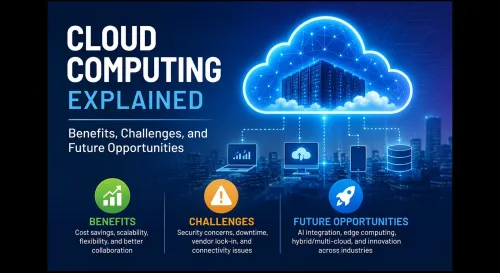
Cloud Computing Explained: Benefits, Challenges, and Future Opportunities
In today's digital world, cloud computing has become one of the most important technologies driving business innovation and personal convenience. From streaming movies and storing photos to running large-scale enterprise applications, cloud computing powers countless services that people use every day. Understanding what cloud computing is, along with its benefits, challenges, and future opportunities, is essential in an increasingly connected world.
What Is Cloud Computing?
Cloud computing refers to the delivery of computing services—including servers, storage, databases, networking, software, and analytics—over the internet, commonly known as "the cloud." Instead of purchasing and maintaining physical hardware, organizations and individuals can access computing resources on demand through cloud service providers.
Major cloud service models include Infrastructure as a Service (IaaS), Platform as a Service (PaaS), and Software as a Service (SaaS). These models offer varying levels of control and flexibility depending on user needs.
Benefits of Cloud Computing
One of the biggest advantages of cloud computing is cost efficiency. Businesses can avoid large upfront investments in hardware and only pay for the resources they use. This pay-as-you-go model helps organizations manage expenses more effectively.
Scalability is another major benefit. Cloud platforms allow companies to quickly increase or decrease computing resources based on demand. This flexibility is particularly useful for businesses experiencing rapid growth or seasonal traffic spikes.
Cloud computing also enhances accessibility and collaboration. Employees can access files, applications, and services from virtually anywhere with an internet connection. This capability supports remote work and enables teams to collaborate in real time.
Additionally, cloud providers offer robust backup and disaster recovery solutions, reducing the risk of data loss and improving business continuity. Many providers also deliver advanced security features, regular updates, and automated maintenance, helping organizations focus on their core operations.
Challenges of Cloud Computing
Despite its many benefits, cloud computing presents several challenges. Security and privacy concerns remain among the most significant issues. Storing sensitive information on remote servers requires organizations to carefully manage access controls, encryption, and compliance requirements.
Downtime and service outages can also affect cloud-based operations. Although major providers maintain high availability, technical failures can still disrupt services and impact business productivity.
Another challenge is vendor lock-in. Migrating data and applications from one cloud provider to another can be complex and costly. Organizations must carefully evaluate providers and develop strategies to maintain flexibility.
Furthermore, cloud computing depends heavily on reliable internet connectivity. Poor network performance can reduce access to critical applications and services, especially in regions with limited infrastructure.
Future Opportunities
The future of cloud computing looks exceptionally promising. Emerging technologies such as artificial intelligence (AI), machine learning, edge computing, and the Internet of Things (IoT) are increasingly integrated with cloud platforms. These innovations enable faster data processing, smarter decision-making, and improved user experiences.
Hybrid and multi-cloud environments are expected to grow as organizations seek greater flexibility and resilience. Businesses will continue leveraging multiple cloud providers to optimize performance, security, and cost management.
As digital transformation accelerates across industries, cloud computing will remain a key enabler of innovation. From healthcare and finance to education and manufacturing, cloud-based solutions will create new opportunities for growth, efficiency, and global collaboration.