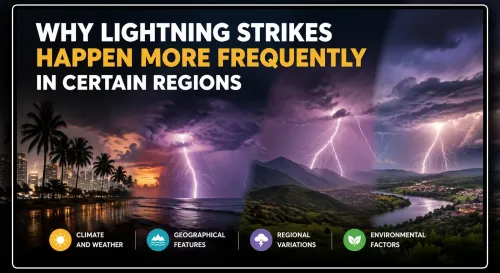
Why Lightning Strikes Happen More Frequently in Certain Regions
Understanding the Power of Lightning
Lightning is one of nature’s most powerful and fascinating phenomena. Although lightning can occur almost anywhere, some regions experience much more frequent lightning strikes than others. This difference is mainly caused by geographical location, climate conditions, and environmental factors. Understanding why lightning happens more often in certain areas can help people prepare and stay safe during storms.
The Role of Climate and Weather Conditions
The main reason some places receive more lightning is because of their weather patterns. Lightning forms inside powerful thunderstorms when warm, moist air rises quickly and collides with colder air in the atmosphere. Regions with hot and humid climates usually have stronger thunderstorms, creating more opportunities for lightning strikes.
Tropical areas near the equator often experience frequent lightning because they receive strong sunlight throughout the year. This heat causes more evaporation, producing large amounts of moisture that fuel storm clouds.
Geographical Features Affect Lightning Activity
The landscape of a region also influences how often lightning occurs. Mountainous areas can experience more thunderstorms because mountains force warm air upward, where it cools and forms storm clouds. This process creates conditions that are favorable for lightning development.
Coastal regions may also experience frequent lightning because the temperature differences between land and ocean can create strong air movements. These changing air conditions help thunderstorms grow stronger.
Regions Known for Frequent Lightning Strikes
Some areas around the world are famous for their high lightning activity. Places such as tropical Africa, parts of South America, Southeast Asia, and regions around large lakes often record thousands of lightning strikes every year.
For example, areas near Lake Maracaibo in Venezuela are known for intense lightning storms due to the combination of warm air, moisture, and unique geographical conditions.
Human Activities and Environmental Changes
Climate change may also influence lightning patterns. Rising global temperatures can increase evaporation and create more moisture in the atmosphere, which may lead to stronger thunderstorms in some regions. Urban areas can also affect local weather by changing heat patterns and airflow.
How People Can Stay Safe During Lightning Storms
Regardless of location, safety is important during thunderstorms. People should avoid open fields, tall trees, and bodies of water when lightning is nearby. Staying indoors, unplugging sensitive electronic devices, and following weather warnings can reduce the risk of lightning-related accidents.
Nature’s Powerful Regional Differences
Lightning does not strike equally everywhere. Differences in climate, geography, and environmental conditions make certain regions more likely to experience frequent lightning. By understanding these patterns, communities can better prepare for storms and protect themselves from the dangers of this powerful natural event.