The Future of Smartphones: What to Expect From Next-Generation Mobile Technology
The smartphone has evolved from a luxury communication tool into an indispensable extension of human capability. Yet, as we look toward the next horizon of mobile technology, the device in your pocket is about to undergo its most radical transformation yet. The next generation of smartphones will move beyond static screens and siloed apps, maturing into highly adaptive, context-aware AI partners.
Here is what to expect from the future of mobile technology.
Hyper-Personalized, On-Device Artificial Intelligence
While current smartphones leverage cloud-based AI for voice assistants and photo editing, next-generation devices will shift the heavy lifting directly onto the device. Advanced Neural Processing Units (NPUs) will enable massive generative AI models to run locally without internet dependencies.
Your future phone won't just react to commands; it will anticipate your needs. By securely analyzing your daily habits, biometric data, and environmental context directly on the hardware, an on-device agent will proactively manage your schedule, draft context-specific communications, and curate information before you even think to ask. Because this data stays on the silicon, user privacy will receive a massive upgrade.
Radical Form Factors and Adaptive Displays
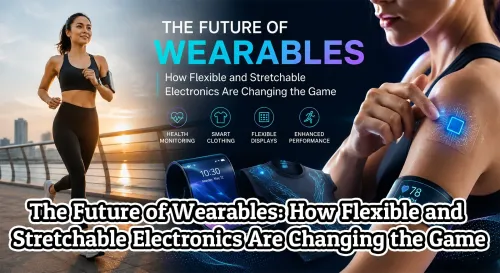
The era of the rigid glass rectangle is drawing to a close. While early foldable phones introduced the concept of flexible screens, next-generation devices will perfect form-factor fluidity. We will see the rise of rollable and slidable displays that expand smoothly at the touch of a button, transitioning a compact handheld device into a full-sized tablet without a visible crease.
Furthermore, advancements in materials science will introduce self-healing screen polymers that can autonomously mend minor scratches and cracks overnight. Displays will also become more energy-efficient, utilizing advanced micro-LED technology to offer blinding brightness outdoors while consuming a fraction of the power used by today’s OLED screens.
Beyond the Battery: Ambient Charging and Solid-State Power
Battery anxiety remains one of modern tech's greatest friction points. The next wave of mobile innovation aims to solve this through two distinct pathways: solid-state batteries and ambient wireless charging.
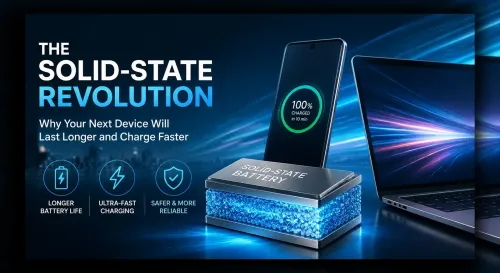
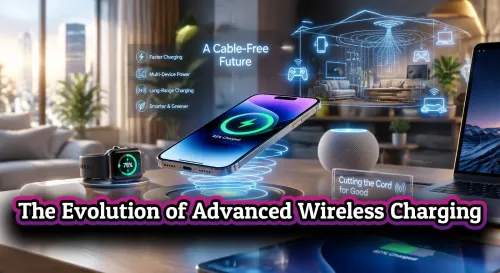
Solid-state batteries replace the volatile liquid electrolytes found in current lithium-ion packs with solid materials. This shift allows for significantly higher energy density, meaning phones can become thinner while lasting multiple days on a single charge—all while eliminating the risk of overheating. Simultaneously, true over-the-air ambient charging will begin to emerge, allowing your phone to draw low-voltage power from the air via specialized radio frequencies, keeping your device topped up just by walking into a properly equipped room.
Seamless Spatial Computing Integration
The future smartphone will serve as the primary engine for the spatial computing ecosystem. Instead of competing with Augmented Reality (AR) glasses or smart rings, the smartphone will act as the localized "brain" for these peripherals.
Through ultra-wideband tracking and advanced near-field communication, your phone will project seamless interfaces onto the world around you via lightweight eyewear. Whether you are navigating a new city with virtual arrows painted on the sidewalk or expanding your workspace into a trio of floating digital monitors, the smartphone will remain the central hub managing the immense processing power required to overlay the digital world onto the physical one.