iPhone 12 Teardown: Why Apple Shrank the Battery for 5G & Cameras
When a new iPhone launches, the most fascinating details aren't always found on the keynote stage—they are discovered the moment repair technicians pry off the glass display. A detailed teardown video recently surfaced, giving us an intimate look inside the iPhone 12 and iPhone 12 Pro. The biggest revelation? A surprising drop in physical battery capacity compared to the previous generation, driven by the massive internal demands of next-generation networking.
Here is a look at what Apple changed under the hood and why they had to make these engineering trade-offs.
Twins on the Inside: The Shared Architecture
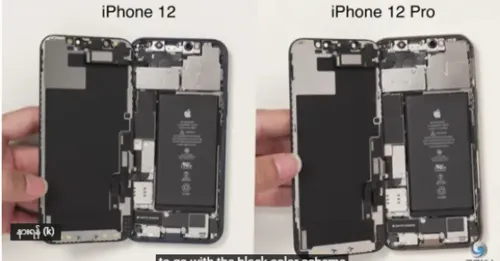
Opening up the standard iPhone 12 and the 12 Pro reveals an unprecedented level of component unification. Apple engineered both devices with virtually identical L-shaped logic boards. The internal footprint is so similar that the standard iPhone 12 essentially uses the Pro’s base board design, simply leaving empty spaces where the Pro-exclusive components go.
The primary difference on the logic board is an extra hardware connector found only on the Pro model. This dedicated port drives the **LiDAR Scanner** and the third optical telephoto camera lens. Because the physical chassis and internal layouts are shared, Apple was able to streamline manufacturing. However, this shared skeleton also meant both phones had to operate within the exact same battery constraints.
The 5G Tax: Why the Battery Got Smaller
The most heavily debated discovery from the teardown is the battery size. Both the iPhone 12 and iPhone 12 Pro are equipped with a 2,815mAh battery. This is a noticeable physical downgrade from the 3,110mAh cell found in the older standard iPhone 11.
Why would Apple deliberately shrink the battery? It comes down to a battle for internal real estate and the hardware demands of the "5G tax."
Moving to 5G required several massive internal shifts:
The Qualcomm X55 Modem: This 5G modem and its companion transceiver chips take up significantly more physical space on the logic board than older 4G LTE components.
Antenna Placement: 5G networks—especially the ultra-fast mmWave bands—require multiple distinct antenna modules distributed around the outer frame of the device to ensure a strong signal.
A Thinner Profile: Apple simultaneously reduced the thickness of the entire iPhone 12 line to just 7.4mm (down from 8.3mm on the iPhone 11).
When you combine a radically thinner chassis with bulky 5G networking chips and upgraded camera modules, the battery is the only component flexible enough to absorb the space deficit.
The Complete Battery Breakdown
With teardowns complete across the entire lineup, here is exactly what is powering the iPhone 12 family:
- iPhone 12 mini: 2,227mAh
- iPhone 12: 2,815mAh
- iPhone 12 Pro: 2,815mAh
- iPhone 12 Pro Max: 3,687mAh
Because the standard 12 and 12 Pro share the exact same capacity, their zero-to-full charging times are identical. Despite having less physical battery volume than their predecessors, Apple relied heavily on the power efficiency of the new 5-nanometer A14 Bionic chip to bridge the gap and maintain competitive daily battery life.
Ultimately, smartphone engineering is a game of trade-offs. To deliver a sleeker design, MagSafe magnets, and blazing-fast 5G connectivity, physical battery size had to take a temporary back seat.