The Future of Artificial Intelligence: How AI Is Transforming Everyday Life
Artificial Intelligence (AI) is no longer a futuristic concept found only in science fiction movies. Today, AI has become an integral part of our daily lives, influencing how we work, communicate, shop, travel, and even manage our health. As technology continues to evolve, AI is shaping the future in ways that were once unimaginable.
What Is Artificial Intelligence?
Artificial Intelligence refers to computer systems designed to perform tasks that typically require human intelligence. These tasks include learning from data, recognizing patterns, understanding language, making decisions, and solving complex problems. Modern AI systems use advanced algorithms and machine learning techniques to improve their performance over time.
AI in Everyday Life
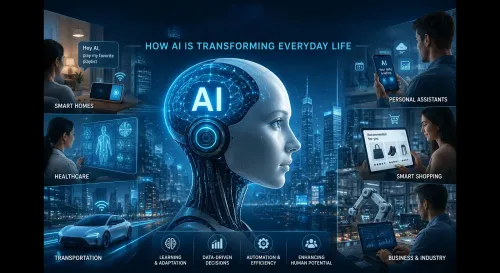
Many people interact with AI every day without realizing it. Virtual assistants such as Siri, Google Assistant, and Alexa help users manage schedules, answer questions, and control smart devices. Streaming platforms use AI to recommend movies, music, and content based on individual preferences. Online shopping websites rely on AI to suggest products and improve customer experiences. Social media platforms also use AI to personalize content feeds, detect harmful content, and improve user engagement. Navigation apps analyze traffic patterns in real time to provide the fastest routes and reduce travel delays.
Transforming Healthcare
One of the most significant impacts of AI is in healthcare. AI-powered systems can analyze medical images, assist in disease diagnosis, and predict health risks with remarkable accuracy. Hospitals are increasingly using AI to streamline operations, improve patient care, and support doctors in making informed decisions. Wearable devices equipped with AI can monitor heart rates, sleep patterns, and physical activity, helping individuals maintain healthier lifestyles and detect potential health issues early.
Revolutionizing Business and Industry
Businesses across various industries are adopting AI to increase efficiency and productivity. Automated customer service chatbots provide instant support, while predictive analytics help companies forecast demand and optimize inventory management. Manufacturing companies use AI-powered robots to perform repetitive tasks with precision and consistency. Financial institutions leverage AI to detect fraud, assess risks, and deliver personalized banking services.
Smart Homes and Connected Devices
The rise of smart homes demonstrates how AI is making life more convenient. Smart thermostats learn user preferences to optimize energy consumption, while intelligent security systems can recognize unusual activity and send alerts in real time. Connected devices communicate with each other through the Internet of Things (IoT), creating seamless and automated living environments that enhance comfort, security, and efficiency.
Challenges and Ethical Considerations
Despite its many benefits, AI also presents challenges. Privacy concerns, data security, algorithmic bias, and job displacement are important issues that require careful consideration. Governments, businesses, and technology developers must work together to ensure AI is developed responsibly and ethically. Transparency, fairness, and accountability will play crucial roles in building public trust and ensuring that AI technologies benefit society as a whole.
The Future Ahead
The future of AI is incredibly promising. Advances in machine learning, natural language processing, and robotics will continue to unlock new possibilities across industries. From autonomous vehicles and smart cities to personalized education and advanced healthcare solutions, AI has the potential to improve quality of life on a global scale.
As we move forward, embracing AI while addressing its challenges will be essential. Organizations and individuals who adapt to this technological transformation will be better positioned to thrive in an increasingly intelligent and connected world.