How Drinking Water Is Made: Step-by-Step Process of Water Purification
The Importance of Clean Drinking Water
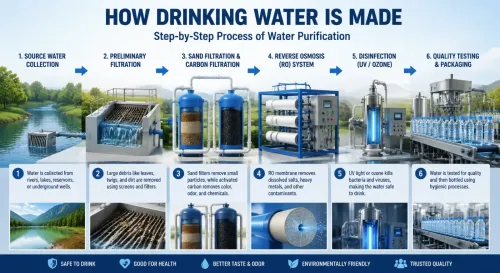
Water is one of the most essential resources for human life. However, natural water sources may contain bacteria, dirt, harmful chemicals, and other impurities that can affect human health. To make water safe for drinking, modern water treatment facilities use advanced purification technologies to remove contaminants and produce high-quality clean water.
Step 1 — Collecting Water from Natural Sources
The first step in producing clean water is collecting water from a suitable source. Water may come from underground wells, rivers, lakes, or reservoirs. After collection, the water is carefully tested in laboratories to measure its quality and determine what treatment processes are needed.
Step 2 — Removing Large Impurities Through Filtration
In the beginning stage, water contains visible particles such as sand, soil, leaves, and other large debris. These impurities are removed using large filtration systems. This process helps prepare the water for further purification steps by reducing the amount of solid waste.
Step 3 — Sand Filtration and Activated Carbon Filtration
After basic filtration, the water passes through sand filters and activated carbon filters. Sand filters remove smaller particles and sediments, while activated carbon filters help eliminate unpleasant odors, colors, chlorine, and certain chemical substances that may affect water quality.
Step 4 — Purification Through Reverse Osmosis (RO) Technology
One of the most advanced methods used in modern water purification is Reverse Osmosis (RO). This technology uses a special membrane with extremely tiny pores that allow clean water molecules to pass through while blocking dissolved salts, heavy metals, and other unwanted substances.
Step 5 — Eliminating Bacteria and Microorganisms
Even after filtration, some microorganisms may remain in the water. To ensure safety, water treatment plants use technologies such as ultraviolet (UV) light and ozone treatment. These methods destroy harmful bacteria and viruses without adding harmful chemicals to the water.
Step 6 — Quality Testing and Packaging
Before reaching consumers, purified water goes through strict quality checks. Experts test the water’s pH level, mineral content, and safety standards to ensure it meets drinking water requirements. After approval, the water is bottled or packaged in clean containers and distributed to homes and businesses.
Conclusion
A single bottle of clean drinking water goes through many important stages before it reaches our hands. From collecting natural water sources to advanced filtration, sterilization, and quality testing, every step plays a crucial role in creating safe and healthy drinking water. Understanding this process helps us appreciate the technology and effort behind the clean water we use every day.