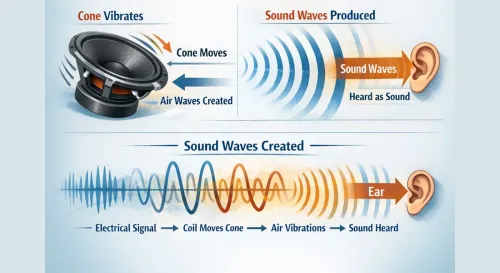
How a Speaker Produces Sound: Step-by-Step Explanation
Speakers are devices that convert electrical signals into audible sound. They are used in many devices such as smartphones, televisions, computers, and sound systems. Although they may look simple from the outside, speakers work through a fascinating process involving electricity, magnetism, and vibration. Below is a step-by-step explanation of how a speaker produces sound.
1. Audio Signal Is Created
The process begins with an audio signal. This signal is an electrical representation of sound that comes from a device such as a phone, computer, microphone, or music player.
For example, when you play music on your phone, the digital audio file is converted into an electrical signal by the device’s audio circuitry. This signal contains information about the sound’s frequency (pitch) and amplitude (volume).
However, this signal is usually very small and weak, so it needs to be strengthened before it can move the speaker components.
2. Amplifier Boosts the Signal
Before reaching the speaker, the signal normally passes through an amplifier.
The amplifier increases the power of the audio signal so that it becomes strong enough to drive the speaker. Without amplification, the signal would be too weak to create noticeable vibrations.
Amplifiers are found in many devices such as:
Home stereo systems
Bluetooth speakers
Car audio systems
Professional sound equipment
After the signal is amplified, it is sent to the speaker through wires.
3. Electrical Signal Reaches the Voice Coil
Inside the speaker is a component called the voice coil. This is a small coil of thin copper wire attached to the back of the speaker cone.
When the electrical audio signal flows through the voice coil, it creates a magnetic field around the coil. The strength and direction of this magnetic field change continuously according to the audio signal.
This changing magnetic field is the key to creating movement inside the speaker.
4. Interaction with the Permanent Magnet
Another important component inside the speaker is a permanent magnet. This magnet produces a constant magnetic field.
The voice coil is positioned within this magnetic field. When the electrical signal flows through the coil and generates its own magnetic field, the two magnetic fields interact.
Depending on the signal:
The coil may be pushed outward, or
Pulled inward toward the magnet.
This happens very rapidly, sometimes thousands of times per second.
5. Speaker Cone Moves Back and Forth
The voice coil is attached to a speaker cone (also called a diaphragm). When the voice coil moves due to magnetic forces, it pushes and pulls the cone.
As the cone moves:
It pushes air forward
Then pulls air backward
These rapid movements create pressure waves in the air.
The cone can move extremely fast depending on the sound frequency. High-frequency sounds cause very fast vibrations, while low-frequency sounds create slower, larger movements.
6. Air Vibrations Become Sound
The pressure waves created by the moving cone travel through the air. These waves eventually reach our ears.
Inside the human ear, the vibrations are detected by the eardrum, which moves in response to the sound waves. The brain then interprets these vibrations as sound, such as music, speech, or other noises.
The accuracy of these vibrations determines the quality of the sound you hear.