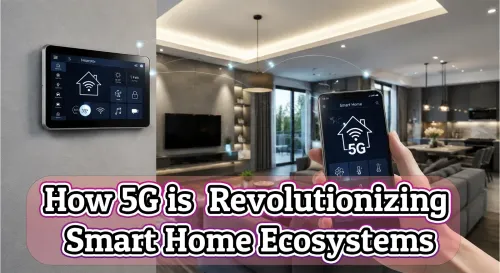
Beyond the Smartphone: How 5G is Revolutionizing Smart Home Ecosystems
Introduction: A New Era of Connected Living
For years, smartphones have been the center of our digital lives, connecting us to information, entertainment, and communication. However, the next wave of technology is shifting beyond handheld devices. With the rapid expansion of 5G networks, smart homes are becoming more intelligent, responsive, and interconnected than ever before.
Faster Connections, Smarter Homes
Traditional smart home devices often depend on Wi-Fi networks that can struggle when multiple devices are connected simultaneously. 5G changes this by delivering ultra-fast speeds, lower latency, and greater network capacity. This allows smart appliances, security systems, sensors, and entertainment devices to communicate instantly without delays.
Imagine a home where your lights adjust automatically when you enter a room, your security camera detects unusual activity in real time, and your smart assistant manages household tasks seamlessly — all powered by reliable 5G connectivity.
The Rise of AI-Powered Smart Devices
5G is also accelerating the growth of artificial intelligence in homes. Smart devices can now process and exchange massive amounts of data quickly, enabling advanced features such as predictive maintenance, personalized climate control, and intelligent energy management.
For example, a smart thermostat can analyze your daily routine and automatically optimize temperature settings to improve comfort while reducing energy consumption. Similarly, AI-powered security systems can identify potential threats and send instant alerts to homeowners.
Smart Homes Beyond Four Walls
The impact of 5G extends beyond individual homes. Connected communities, smart cities, and automated infrastructure are becoming possible through faster communication networks. From smart parking systems to intelligent energy grids, 5G creates a foundation for a more connected world.
Challenges and the Road Ahead
Despite its benefits, 5G-powered smart homes face challenges, including privacy concerns, cybersecurity risks, and the need for compatible devices. As more devices become connected, protecting personal data will become increasingly important.
Conclusion: The Future of Intelligent Living
5G is transforming smart homes from simple collections of connected gadgets into intelligent ecosystems that understand and respond to human needs. As technology continues to evolve, the future home will not just be connected — it will be adaptive, efficient, and truly smart.