Behind the Glow: The Rise and Fall of Razer's Gaming-Style Mask
The Pandemic Pivot
Before 2020, the gadgets unveiled at CES were largely focused on living room entertainment—curved TVs and massive surround-sound systems dominated the show floor. But as the decade turned, public interest shifted dramatically. Technology companies suddenly needed to pivot toward a world where people were navigating a global pandemic.
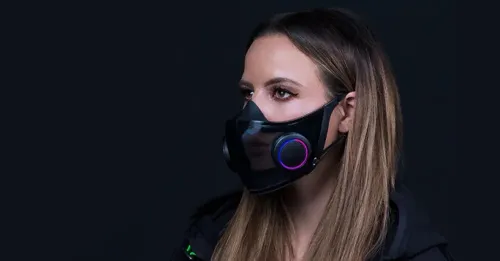
Enter Razer. Known for their flashy, gamer-centric peripherals, they introduced "Project Hazel" at CES 2021—an advanced, futuristic face mask concept designed specifically for the COVID-19 era.
The Cyberpunk Dream
Would you believe it if you had 16.8 million colors glowing on your face? Knowing Razer, it should come as no surprise. The company took the basic idea of a surgical mask and infused it with their signature LED-smothered gamer aesthetic. Project Hazel was designed to stand out, boasting several highly ambitious features:
Transparent Design: A clear plastic front allowed others to see the wearer’s lips moving, aiding in social interaction and lip-reading—a major advantage over standard cloth masks.
Active Ventilation: The mask featured a dedicated system with dual vents to pull in fresh air and keep the wearer's face cool.
Chroma RGB Lighting: Customizable lighting rings around the vents allowed gamers to match their mask to their mouse and keyboard. It even included interior lighting to illuminate the mouth in the dark.
Voice Modulation: Early concepts boasted a built-in microphone and amplifier to prevent the muffled speech common with traditional face coverings.
Reality Bites: The Zephyr Hits Retail
Early live demos left many practical questions unanswered regarding battery life, weight, and the potential for the electronics to overheat. Still, Razer managed to bring the concept to life. In late 2021, the mask officially hit retail shelves for $99.99 under a new name: the Razer Zephyr.
The retail version retained the active fans, the transparent front, and the signature RGB lighting. The voice amplifier, however, was temporarily cut from the base model to save on weight and preserve battery life.
The N95 Controversy
The transition from a cool CES prototype to a commercial health product ultimately proved disastrous. When the Zephyr launched, Razer heavily marketed it as an "N95-grade" wearable air purifier.
Tech reviewers and engineers immediately raised red flags. They pointed out that the filters were too small and the silicone face gasket failed to provide a reliable, airtight seal. More importantly, it was quickly discovered that the mask had never been tested or certified by the FDA or the National Institute for Occupational Safety and Health (NIOSH).
The FTC Fallout
The backlash was swift and severe. Under immense public pressure, Razer quietly stripped all "N95" claims from their marketing, admitting the Zephyr was not actually certified personal protective equipment (PPE). The controversy eventually caught the attention of the U.S. government.
1. FTC Intervention: In April 2024, the Federal Trade Commission officially ruled that Razer had falsely advertised the mask's protective capabilities.
2. The Penalties: Razer was ordered to pay over $1.1 million to provide full refunds to all Zephyr buyers, alongside an additional $100,000 civil penalty.
Ultimately, what started as one of the most innovative and highly anticipated gadgets of the pandemic era ended up as a cautionary tale about the dangers of mixing marketing hype with unverified health claims.