From Sparks to Striking: The Accidental Invention That Changed the World
For most of human history, creating fire was a chore. It involved laboriously striking flint against steel, coaxing a fragile spark into a nest of dry tinder, and praying a gust of wind wouldn’t blow out your hard work. While early innovations like sulfur-dipped wooden splints existed in ancient China as early as the 6th century, these still required an existing flame or spark to work. They weren't self-lighting.
That all changed in 1826, thanks to a fortunate accident in a small apothecary shop in Stockton-on-Tees, England.
The Chemistry of a Happy Accident
An English chemist and pharmacist named John Walker was busy preparing an experimental paste for use in explosives. He was stirring a volatile mixture of antimony sulfide, potassium chlorate, gum, and starch using a simple wooden splint. When he pulled the stick out, a small blob of the dried chemical paste remained stuck to the end.
Attempting to scrape the stubborn, crusty lump off against his hearth floor, Walker was startled. Instead of chipping away, the friction caused the stick to violently burst into flame.
Recognizing the immense potential of his accidental discovery, Walker began manufacturing these "friction lights" in 1827. He sold them in tin cases accompanied by a piece of sandpaper for striking. Surprisingly, despite friends urging him to patent his invention, Walker chose not to. He believed that the technology was too useful to mankind to be monopolized by a single person.
From Dangerous Sparks to Safety Matches
Because Walker lacked a patent, it didn’t take long for others to copy and alter his design. A London inventor named Isaac Holden independently came up with a similar match, and a man named Samuel Jones pirated the idea to sell "Lucifers"—matches that ignited with a spectacular shower of sparks and a foul, suffocating sulfur smell.
These early friction matches were undeniably dangerous. They used yellow (white) phosphorus, which was highly toxic. Factory workers who manufactured them suffered from a horrific bone-degrading disease known as "phossy jaw." Furthermore, these matches were notoriously unstable; they could ignite unexpectedly inside a pocket from simple friction.
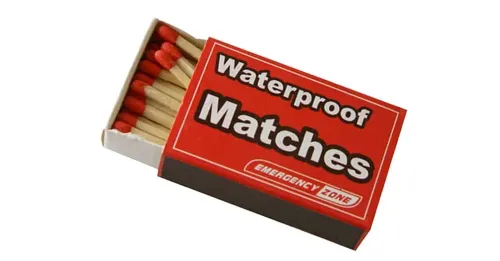
The final evolution of the match arrived in 1844, when Swedish inventor Pasch separated the combustion ingredients. He put the non-toxic red phosphorus on a special striking surface outside the box, rather than on the match head itself. This gave birth to the modern safety match, perfected and mass-produced by the Lundström brothers shortly after.
A Tiny Stick with Massive Impact
The discovery of the match did more than just light candles and stoves; it fundamentally democratized fire. It offered instant, portable heat and light to the everyday worker, transforming industries, domestic life, and global exploration. The next time you strike a match, you are triggering a chain reaction born from a nineteenth-century chemist simply trying to clean his stirring stick.