The Science of Berkelium: Elements, Origins, and Impacts
Berkelium is a fascinating member of the actinide series, a group of heavy, radioactive elements found at the bottom of the periodic table. Characterized by its distinct silvery metallic appearance, berkelium is highly reactive and capable of forming numerous chemical compounds. It readily combines with oxygen, reacts with water vapor, and dissolves easily in mineral acids. However, it remains completely unreactive when exposed to alkalis.
Discovery and Synthesis
The story of berkelium began in December 1949 at the University of California, Berkeley, the institution after which the element was proudly named. It was synthesized by an elite team of legendary scientists: Stanley G. Thompson, Albert Ghiorso, and Glenn T. Seaborg.
Using a cyclotron, the team bombarded a few milligrams of Americium-241 with helium ions. This high-energy collision produced the first recognized isotope of the element, Berkelium-243, which possessed a brief half-life of roughly 4.5 hours.
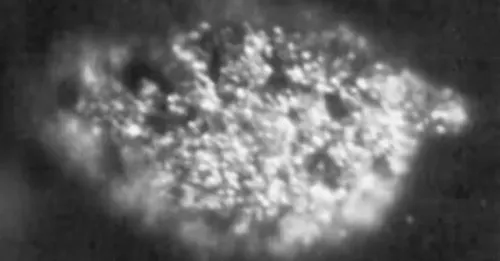
To date, ten distinct isotopes of berkelium have been discovered. Among these, Berkelium-249 stands out as highly significant for scientific research. Thanks to its relatively long half-life of 314 days, scientists can accumulate this isotope in measurable quantities, allowing them to analyze and understand its specific chemical and physical properties with much greater accuracy. By 1962, researchers successfully isolated the first visible, pure compound of the element: berkelium chloride.
Chemical Behavior and Industrial Scarcity
While pure berkelium is a silvery metal, it cannot be found as a free element in nature. X-ray diffraction methods are primarily used by researchers to analyze, identify, and separate its various complex compounds.
Like other heavy actinide elements, berkelium behaves dynamically at high temperatures, easily reacting with air or oxygen to form oxides. Because it is incredibly scarce and extraordinarily expensive to synthesize in particle accelerators, berkelium currently has no commercial or technical applications outside of specialized laboratory research.
Health and Environmental Implications
Because berkelium does not exist naturally on the Earth's surface, it poses virtually zero risk to the general public or the everyday environment. However, the artificial isotopes created in laboratory settings are highly radioactive and dangerous to human health.
If nuclear research activities inadvertently release these isotopes, radioactivity can contaminate natural environments like water, air, and the oceans. These invisible, high-energy rays can penetrate the body through the food chain or direct exposure, leading to severe health complications.
Inside the body, berkelium behaves similarly to other actinides by targeting and accumulating in the skeletal system. The radiation it emits can damage the genetic material of living organisms and destroy reproductive cells, rendering them incapable of replicating. Even low levels of exposure to this radiation can trigger various forms of cancer.
While the exact long-term mechanics of exposure are still being studied and modeled through predictions, the primary hazard remains its high radioactivity. Fortunately, because it is strictly contained in microscopic quantities within controlled research facilities, it has no impact on our broader global ecosystem.


