A Brief History of Toothpaste: From Ancient Egypt to Modern Tubes
Every morning and every night, millions of people around the world partake in a remarkably similar routine: we squeeze a dollop of minty paste onto a bristled brush and scrub our teeth. It is a simple daily habit, yet it is one that helps us prevent oral diseases, eliminate bad breath, and maintain our overall personal health. While the convenience of modern toothpaste is something we often take entirely for granted, the journey to that familiar squeeze tube is a fascinating tale spanning over 5,000 years of human history.
The Ancient Alchemists of Oral Care
Long before the invention of the modern toothbrush in 1400s China, ancient civilizations were already deeply invested in dental hygiene. Historians trace the earliest iterations of tooth-cleaning powders back roughly five millennia to ancient China, India, and Mongolia. However, the most famous early recipe was discovered in Egypt, dating back to the 4th century AD. The Egyptians concocted a rather abrasive and pungent mixture utilizing crushed rock salt, pepper, plantain, and dried iris flowers. Depending on the region, other early island and coastal cultures improvised with what they had, relying on crushed oyster shells and charcoal powder to scrub away the day's debris.
Middle Age Innovations and Peculiar Pastes
As centuries passed, oral care evolved, often taking somewhat bizarre turns. The Romans were famously known to experiment with dental treatments based on human urine, utilizing its natural ammonia as a cleaning agent. Thankfully, far more pleasant alternatives emerged. In the 9th century, a renowned Persian musician and fashion designer named Ziryab introduced a new type of toothpaste to Islamic Spain. While the exact chemical makeup of his invention remains a historical mystery, it was highly celebrated for being both functionally effective and wonderfully fragrant.
By the 18th century in America and Britain, dental care took another gritty turn. People frequently used powders made from burnt bread to scour their teeth. Another popular, albeit dramatic-sounding, formula was known as "dragon's blood," which combined cinnamon with burnt alum to create a potent cleansing liquid.
The Squeeze Tube Revolution
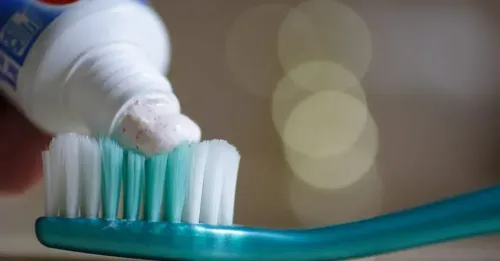
The ultimate turning point for modern oral hygiene arrived in the late 19th century. In 1892, a dentist from New London named Dr. Washington Sheffield revolutionized the industry forever. He drew inspiration from his son, who had recently visited Paris and noticed local artists cleanly squeezing their paints from collapsible metal tubes. Dr. Sheffield realized this packaging would be perfectly sanitary and convenient for his own dental cream. He introduced Sheffield’s Creme Dentifrice, the world's very first toothpaste housed in a capsule-type squeeze tube. Just a few short years later, in 1896, Colgate & Company adopted this brilliant packaging design in New York City, bringing mass-produced toothpaste to the global market.
The 1900s officially ushered in the era of scientific oral care. Ingredients like hydrogen peroxide, baking soda, and eventually fluoride and xylitol were added to safely combat decay. Today, we have an endless array of advanced gels and creams sitting comfortably on our bathroom sinks. The next time you brush your teeth, take a brief moment to appreciate the centuries of bizarre recipes and brilliant innovations that made your healthy, bright smile possible.